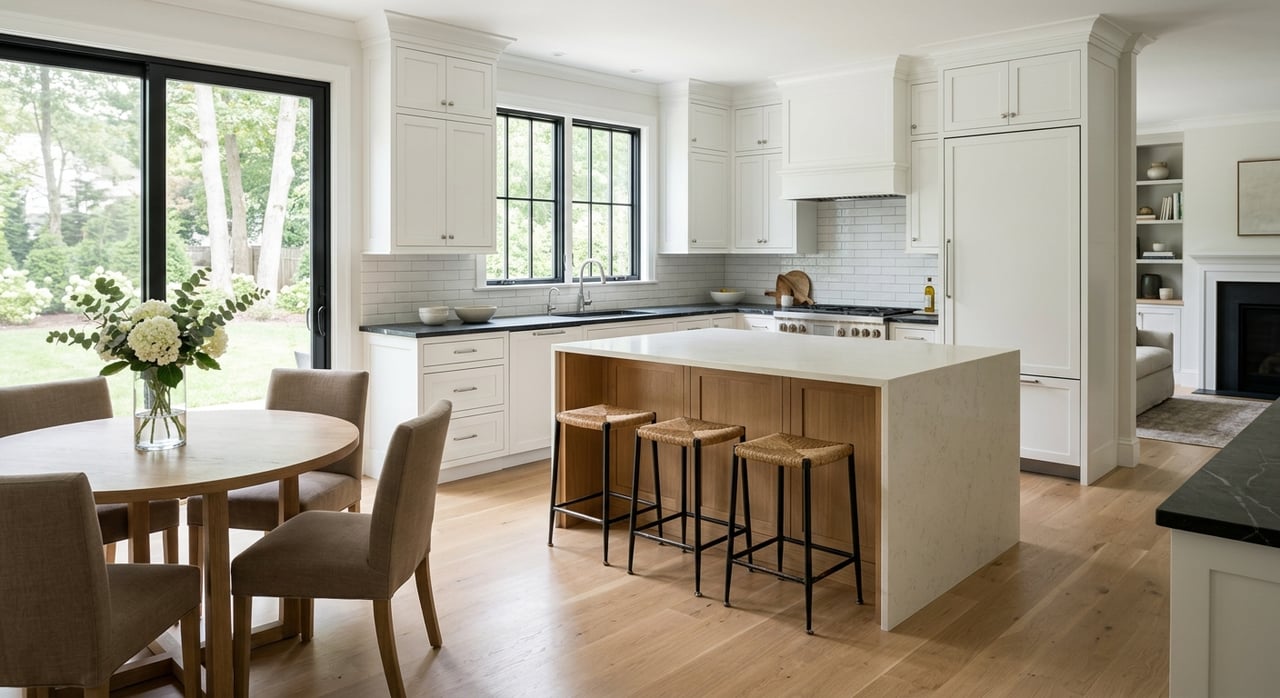
Sudbury Housing Market Comparison With Nearby Towns
July 2, 2026
July 2, 2026
If you are comparing Sudbury to nearby towns, you are probably trying to answer a bigger question: what do you get here that feels different from Wayland, Weston, or Natick? Price matters, of course, but so do housing style, lot patterns, and the way daily life works once you move in. A side-by-side look can help you narrow your search or better position your home if you plan to sell. Let’s dive in.
Sudbury sits in an interesting middle ground among nearby towns. It is clearly a high-end market, but it is not priced like Weston, and it is not the most affordable option in this group either.
Recent Zillow market pages place Weston at about $2.29 million in typical home value. Sudbury and Wayland are very close to each other at roughly $1.17 million, while Natick comes in lower at about $911,000. For many buyers, that means Sudbury often competes most directly with Wayland rather than Weston or Natick.
Here is the simplest way to think about it:
| Town | Typical Home Value | General Price Position |
|---|---|---|
| Weston | $2.29M | Highest of the group |
| Sudbury | $1.17M | High-end, close to Wayland |
| Wayland | $1.17M | Very similar to Sudbury |
| Natick | $911K | Lowest entry point of the four |
If you are shopping across town lines, Sudbury may feel like a way to stay in a strong suburban price tier without reaching Weston’s level. If you are selling in Sudbury, this also matters for pricing strategy because buyers often compare your home directly with options in Wayland and, in some cases, Natick.
One of Sudbury’s clearest defining traits is its housing mix. The town’s 2024 Housing Production Plan says 94% of its 6,323 housing units are single-family homes. That is the highest single-family concentration among the towns in this comparison.
That number tells you a lot about the character of the housing stock. If you picture detached homes, larger residential settings, and a market shaped mostly by single-family resale, Sudbury fits that image very closely.
Wayland is also heavily oriented toward single-family housing, though it has a somewhat broader mix. Its housing plan reports 4,053 single-family units and 591 condominium units, with multifamily making up only a small share overall.
Weston is similar in feel, though slightly less concentrated than Sudbury. Weston’s housing plan says 89% of housing units are single-family, with 87% detached single-family and only 5% in buildings with 10 or more units.
Natick stands apart from the other three. About 61% of its housing units are detached single-family, while roughly 35% are multifamily, making it the most varied housing market in this group.
For buyers, Sudbury offers a more focused single-family market than Natick and even a somewhat more single-family-heavy profile than Weston or Wayland. That can be helpful if your search is centered on detached homes and you want fewer mixed-housing environments.
For sellers, this concentration matters because your likely buyer pool may already be looking specifically for single-family living. In a town like Sudbury, home presentation, pricing, and neighborhood positioning often need to speak clearly to that audience.
Housing type is only part of the story. The way land is used shapes how a town feels when you drive through it, live in it, and compare one area to another.
Weston has the clearest large-lot profile in this group. Its housing plan says single-family districts range from 20,000 to 60,000 square-foot minimum lots, and most residential lots meet or exceed those minimums.
Wayland’s housing chapter uses that same 20,000 to 60,000 square-foot range in its density examples and notes that the current zoning framework offers very little opportunity to build housing types other than single-family homes at moderate to low density.
Sudbury sits between Weston’s estate-like pattern and Natick’s more compact land use. Sudbury’s 2024 plan points to smaller, more land-efficient forms such as 1,500- to 2,000-square-foot home clusters and duplexes by right on single-family lots, which suggests incremental infill pressure rather than a dramatic shift in overall character.
Natick is the most compact of the four. Its land-use plan says 47% of the town’s land is in residential use, and the share of residential land devoted to multifamily uses rose from 4.3% in 1999 to 17% today.
In practical terms, you can think of the towns this way:
If you are deciding based on feel as much as price, this is often where the right choice becomes clearer.
For many households, the biggest difference between Sudbury and nearby towns shows up on weekday mornings. Transportation options, commute patterns, and transit access can shape your daily routine as much as the home itself.
Sudbury’s transportation committee says the town is currently car-dependent and has no public transportation within town boundaries. That is an important point if you are hoping for in-town rail or bus access.
Wayland is also more car-oriented than some buyers first expect. The town does not have a commuter rail station within its boundaries, and it points residents to MWRTA Dial-A-Ride and fixed routes, while noting that rail stations are located in neighboring communities.
Weston has a stronger rail option. The town has commuter rail access from Hastings and Kendal Green to Boston’s North Station, though it also notes there is currently no bus service in town.
Natick is the most transit-connected of the four. It has MBTA Framingham/Worcester Line stops at Natick Center and West Natick, along with commuter shuttles tied to those stations.
Census QuickFacts reports these mean travel times to work:
That does not tell you everything about an individual commute, but it does reinforce the broader pattern. Sudbury and Wayland are generally more car-oriented, while Weston and Natick offer stronger rail-based alternatives.
Sudbury often appeals to buyers who want a high-end suburban market with a strong single-family identity and who are comfortable with a car-based daily routine. If your priorities include detached homes, a less compact housing pattern, and a market that compares closely with Wayland on price, Sudbury makes a very logical short list.
It can also be a useful option for buyers who like the general western suburban profile but do not want to shop at Weston’s price level. At the same time, buyers who want the broadest housing mix or the strongest built-in transit access may find themselves looking more closely at Natick.
For sellers, understanding this comparison helps sharpen your positioning. A Sudbury home is often judged not just against other Sudbury listings, but against similar choices in Wayland, against Natick on affordability, and against Weston on prestige and lot profile.
Sudbury stands out as a high-end, mostly single-family, car-oriented suburb that sits closest to Wayland in both price and housing character. It is generally less estate-like than Weston and less mixed and less transit-connected than Natick.
That is exactly why town-to-town comparisons matter. The best fit is not always the town with the highest price or the shortest commute. It is the one that matches how you want to live, what kind of housing you want, and how you weigh tradeoffs between price, home style, and access.
If you are weighing Sudbury against Wayland, Weston, Natick, or another nearby town, working with someone who understands those small but important differences can make the process much clearer. Leah Hart can help you compare options, price strategically, and move forward with confidence.
Stay up to date on the latest real estate trends.